







Summarize With AI


Burnout rarely announces itself. It shows up as a top performer who stops replying to messages within the hour, or a reliable teammate who starts missing small details nobody would have caught them missing six months ago. If you're trying to catch the signs of employee burnout before someone hands in their notice, the behavior usually tells you faster than any survey does.
We360.ai works with more than 120,000 users across 10,000-plus companies in 21-plus countries, and the pattern in our own activity data holds everywhere: burnout shows up in the numbers weeks before it shows up in a resignation letter.
What is employee burnout?
The signs of employee burnout trace back to a state of chronic exhaustion, cynicism, and reduced effectiveness caused by ongoing, unmanaged workplace stress, not a personal failing or a lack of resilience. The World Health Organization formally classifies it as an occupational phenomenon in the ICD-11, its official diagnostic manual, specifically because it results from chronic workplace stress that hasn't been successfully managed, according to the WHO.
What is the ICD-11? The ICD-11 is the World Health Organization's International Classification of Diseases, the reference system doctors and health systems use to name and categorize health conditions worldwide.
That classification matters. It reframes burnout as a workplace design problem rather than something an individual employee should just push through. Understaffing, unrealistic deadlines, and unclear priorities create it. No amount of personal resilience training fixes a structural problem alone.
Early signs of burnout
The early signs of employee burnout show up as small behavior changes well before performance visibly drops: slower responses, quieter meetings, and a shift from proactive to purely reactive work. Catching these early is far cheaper than catching burnout after someone's already updated their LinkedIn.
Four patterns worth watching for specifically. Someone who used to volunteer ideas stops raising their hand. Someone who used to reply within the hour starts taking a day. Someone who used to eat lunch with the team starts eating at their desk alone. Someone who rarely missed a deadline starts missing small ones.
None of these on their own mean much. Together, and sustained over a few weeks, they're a pattern. 1 in 5 highly engaged employees are simultaneously at high risk of burnout, according to Harvard Business Review's coverage of Yale Center for Emotional Intelligence research, which is exactly why "they seem fine, they're just busy" is such a common and costly misread.
Signs of burnout at work: the checklist
Run through this checklist of the most common signs of employee burnout for anyone you're worried about. Four or more sustained over a few weeks is a real signal, not a bad week.
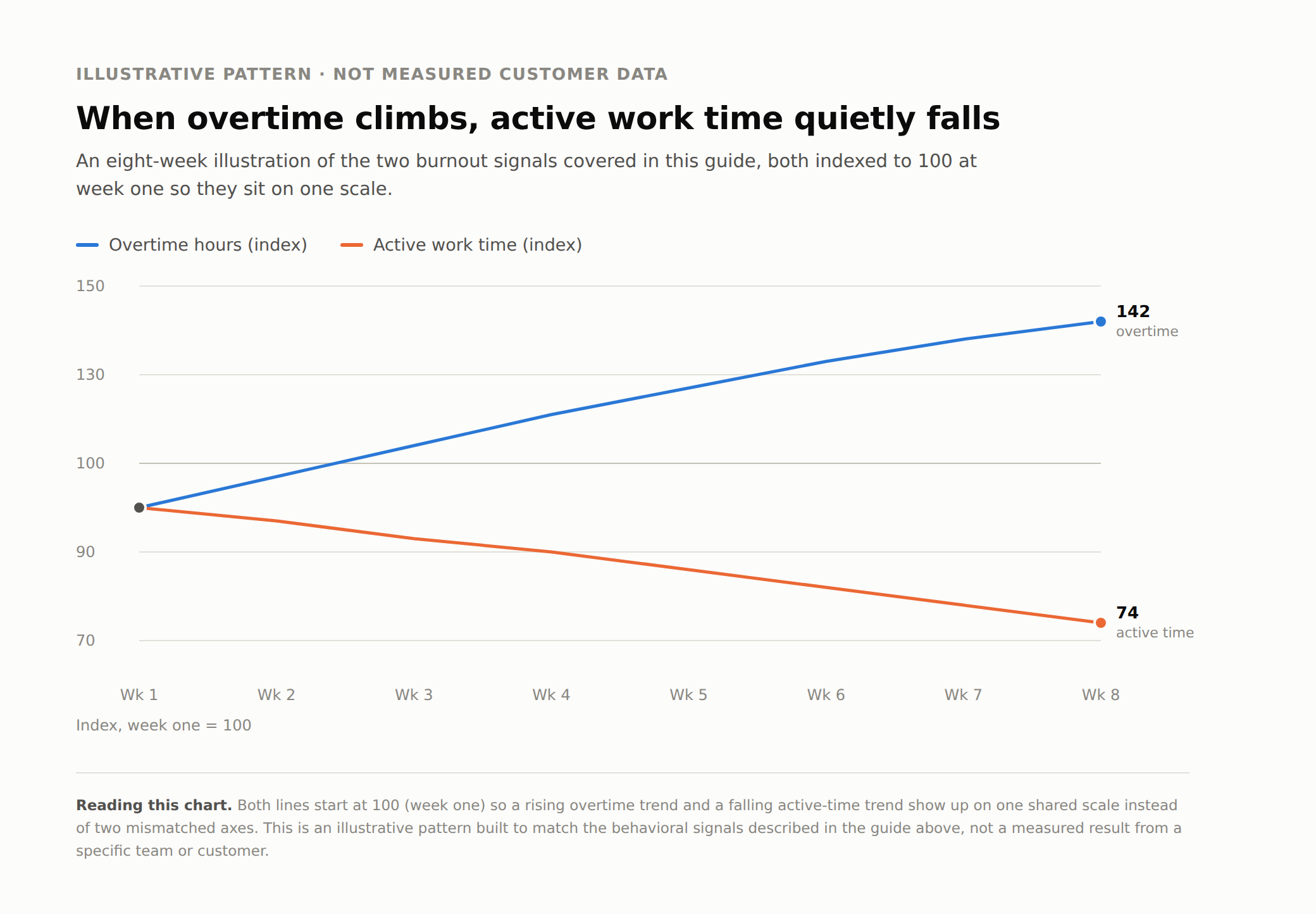
- Overtime is climbing without anyone asking for it.
- Active work time is dropping while idle time rises on the same task list.
- Sick leave clusters around Mondays or Fridays, or short unplanned absences repeat monthly.
- Response times to messages and emails are slowing during normal work hours.
- Small errors are creeping into work that used to be reliably clean.
- Meeting participation is dropping, cameras go off, and updates get thinner.
- The person stops asking for help or flagging blockers, even when clearly stuck.
- Deadline completion rate is slipping on projects that used to land on time.
- They've stopped raising new ideas in planning or retro sessions.
- Vacation and PTO requests have quietly stopped for months at a time.
What causes employee burnout?
Employee burnout is caused by chronic, unmanaged workplace stress, usually from understaffing, unrealistic deadlines, unclear priorities, and a lack of control over one's own workload, not from any single bad week. Unpaid overtime is one of the clearest drivers with real data behind it: employees logging 6 or more hours of unpaid overtime a week face an 84% higher burnout risk if they're men and a 52% higher risk if they're women, according to a 2024 study in the American Journal of Industrial Medicine covering the Canadian workforce.
Working long hours generally, not just unpaid overtime specifically, carries its own risk. Working more than 40 hours a week is significantly associated with higher burnout levels, per a 2016 study in the Journal of Occupational and Environmental Medicine.
The uncomfortable truth is that burnout concentrates in your best people. High performers report a 31% burnout rate compared with 19% among average performers, according to Careerminds' 2025 workforce resilience research covering more than 1,500 employees. The people constantly asked to do more are the ones running out of runway first.
What metrics should managers actually track?
The metrics that catch burnout early are behavioral, not survey-based: working hours, response latency, error rate, and deadline completion, tracked as trends rather than single snapshots. A pulse survey once a quarter misses the six weeks of warning signs that activity data catches in real time.
- Average working hours per day or week. Sustained hours over 40 a week correlate with rising burnout risk.
- After-hours and weekend activity. Regular work after 9 p.m. or on weekends signals eroding boundaries.
- Focus time versus meeting time. Knowledge workers with under 3.5 to 4 hours of daily focus time struggle to finish meaningful work, regardless of how many hours they log.
- Error or rework rate. Rising mistakes on familiar tasks often show up before someone says they're struggling.
- Response latency during work hours. Slower replies to messages and tickets are one of the earliest, most consistent signals.
- Deadline completion rate. A dropping percentage of projects delivered on time, tracked over months, moves from a performance metric to a burnout indicator.
How do I fix burnout at work?
Fixing burnout at work starts with regular one-on-one check-ins that ask about workload and well-being directly, not just project status, combined with realistic goals and genuine time off. Waiting for an annual review to surface a burnout problem means you're already months behind it.
A few moves that hold up in practice. Run short, frequent check-ins instead of relying on annual reviews alone, since burnout can build and fade within a single quarter. Set specific, realistic goals instead of open-ended ones, things like a genuine no-meeting afternoon each week rather than a vague "improve work-life balance" mandate. Protect real breaks: a vacation that gets interrupted by Slack messages isn't a break, it's a delay.
Build trust before you need it. Employees who don't trust that raising a workload problem will actually change anything just stop raising it, which is how a fixable problem turns into a resignation. None of this requires a bigger budget. It requires a manager who notices the pattern before the exit interview.
How We360.ai helps you catch burnout before it costs you someone good
We360.ai tracks the exact signs of employee burnout as they build: rising overtime, falling active time, slowing response rates, and dropping task completion, so managers get a data-backed nudge instead of finding out during an exit interview. That's the same data covered in our guide on early burnout warning signs managers miss, applied as a running trend instead of a one-time check.
Catching burnout early also protects your retention numbers directly. It's part of why teams that act on this data see it show up in lower attrition and fewer surprise resignations from people who looked fine right up until they weren't. We360.ai is SOC 2 Type II and ISO 27001-aligned, so the activity data behind these calls is handled to the same standard as any enterprise HR system.
Ready to see your own team's burnout risk data? Start Free Trial and pull your first trend report this week, or book a demo if you'd rather walk through it with our team first. Full pricing starts at ₹299 per user per month.
How can you tell when an employee is burnt out
Watch for a cluster of changes sustained over weeks: rising overtime, slower email or message replies, more small errors, dropping meeting participation, and a stop in vacation requests. Any one sign alone might mean nothing. Four or more together is a reliable pattern worth a direct conversation.
How do I fix burnout at work?
Start with frequent, honest one-on-one check-ins about workload, not just project status. Set specific, realistic goals instead of vague ones, protect real uninterrupted time off, and build enough trust that people raise workload problems before they become resignations.
What is the WHO definition of burnout?
The World Health Organization's ICD-11 classifies burnout as an occupational phenomenon resulting from chronic workplace stress that hasn't been successfully managed. It's officially framed as a workplace issue, not a personal medical diagnosis or a character flaw.
Can high performers get burned out too?
Yes, often more than average performers. High performers report a 31% burnout rate against 19% for average performers, per Careerminds' 2025 research, largely because they're the ones consistently asked to absorb more work when a team is stretched thin.
How many employees experience burnout at some point?
A: 76% of employees say they experience burnout at least sometimes, according to Gallup's 2020 research. It's common enough that treating it as rare or unusual is itself part of the problem.
Related Posts

A well-designed employee engagement survey can reveal what employees really think about their roles, managers, recognition, growth, and workplace culture. This guide explains what to ask, how often to survey employees, how to improve response rates, and how to turn survey results into meaningful workplace action.
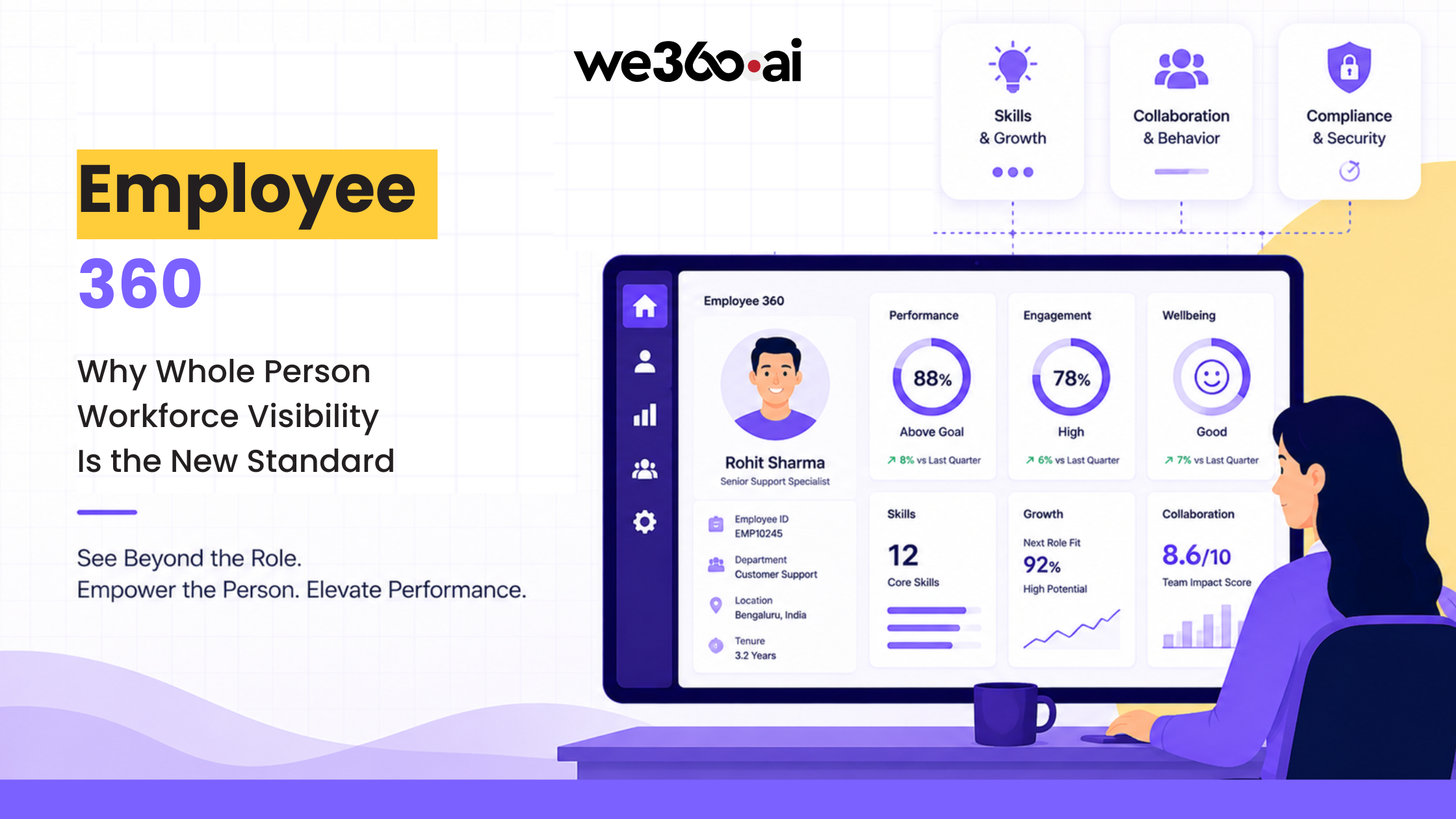
An Employee 360 brings attendance, performance, engagement, learning, and workforce data into one unified view. This 2026 guide explains how Employee 360 works, what data it includes, its benefits for HR teams, and how to implement it effectively while maintaining employee trust and data privacy.

Toxic workplaces rarely become unhealthy overnight. They develop through patterns of poor communication, favoritism, constant blame, unresolved conflict, and fear of speaking up. In this guide, discover the 10 key signs of a toxic workplace, how to spot subtle red flags like gaslighting and workplace cliques, and practical ways to address them.
High employee turnover can quickly impact productivity, costs, and team stability but what actually counts as “too much”? This guide explains how to measure turnover, identify the warning signs, understand why employees leave, and use workforce analytics to spot retention risks before they become resignations