







Summarize With AI


Turnover feels abstract until you're the one rewriting a job posting for the third time this quarter. If you're asking whether your numbers are actually high, or just normal for your industry, you're asking the right question. This guide breaks down what counts as high employee turnover, what it usually says about a manager, the real reasons people leave, and what to do before your next resignation letter lands.
We360.ai works with more than 120,000 users across 10,000-plus companies in 21-plus countries, and turnover is one of the most requested reports in our platform. That's not a coincidence. It's the metric leadership actually gets asked about in board meetings.
What is employee turnover?
Employee turnover is the rate at which employees leave a company over a set period, whether they quit, get let go, or their role gets eliminated. It's usually calculated as (departures during the period ÷ average number of employees) × 100, tracked monthly or annually.
What is voluntary vs. involuntary turnover? Voluntary turnover means the employee chose to leave. Involuntary turnover means the company ended the employment, through a layoff or termination. The two numbers tell very different stories and should never be reported as one blended figure.
Tracking turnover matters because it's a lagging indicator of almost everything else: pay competitiveness, manager quality, workload, and career growth. A single quarter's number doesn't tell you much. The trend over four or five quarters usually does.
What counts as "high" employee turnover
There's no single government-set threshold for what makes turnover "high." High employee turnover depends heavily on your industry, since retail, hospitality, and BPO roles have always run far hotter than finance, healthcare admin, or software engineering.
A useful gut check: if your turnover rate is rising quarter over quarter, sitting well above your own three-year average, or badly out of step with your direct competitors, that's high, regardless of the raw number. A 22% annual rate might be unremarkable for a call center and alarming for a 40-person accounting firm. Context does most of the work here, not the percentage on its own.
What a high turnover rate says about management
High employee turnover on one team almost always says more about management than about the employees who left. Gallup's long-running research on manager impact has found that managers account for at least 70% of the variance in team engagement scores, which means one manager's habits can single-handedly drag a team's retention numbers down while the rest of the company looks fine.
Look for a pattern first: is the churn spread evenly, or is it clustered under one manager or one team? If one manager's direct reports quit at twice the company average, that's rarely bad luck. It's a signal worth a direct conversation, not another engagement survey.
Toxic management habits tend to repeat themselves: micromanagement, taking credit for team wins, inconsistent feedback, and playing favorites. None of these show up cleanly on a scorecard. They show up in signs of a toxic workplace and in exit interviews, if anyone actually reads them.
Top 10 reasons for employee turnover
Most cases of high employee turnover trace back to a short list of repeat causes, and the data backs up which ones matter most right now.
- Compensation that's fallen behind the market. For the first time in six years, pay overtook career growth as the top reason employees are job hunting, according to the Achievers Workforce Institute's 2024 Engagement and Retention Report.
- Burnout from sustained overwork. Burned-out employees are nearly 3 times more likely to be actively job hunting: 45% versus 16% for their non-burned-out peers, per SHRM. Early burnout warning signs usually show up weeks before the resignation does.
- Not trusting their manager. 40% of employees say they've quit a job specifically because they didn't trust the person they reported to, according to LiveCareer's Generational Workplace Trust Report.
- Toxic or inconsistent leadership. Bullying, credit-stealing, and constantly shifting expectations wear people down faster than the workload itself does.
- Poor work-life balance. For the first time in its 22-year history, work-life balance edged out pay as the top job priority (83% versus 82%), and 31% of workers have quit over inflexible scheduling, per Randstad's Workmonitor 2025.
- Caregiving and domestic pressure, especially on women. When Tata Consultancy Services ended its work-from-home policy in 2023, women's attrition outpaced men's. TCS's then-CHRO Milind Lakkad said working from home "reset the domestic arrangements" for some women, and pulling that flexibility back pushed many of them out, Business Standard reported.
- No clear path for growth. Employees who can't see a next step tend to look for one somewhere else, even when pay and workload are both fine.
- Lack of recognition or feedback. Silence reads as indifference. Most people can tolerate a hard year with visible recognition; almost nobody tolerates a hard year with none.
- A hiring or role mismatch from day one. When the job description doesn't match the day-to-day reality, early resignations follow within the first six months.
- A market that's genuinely picked up. 28% of employees now say they're likely to switch employers within 12 months, up from 19% in 2022, according to PwC's Global Workforce Hopes and Fears Survey. Some turnover is just a tighter labor market doing its normal work.
How turnover affects productivity
Turnover drags on productivity long before a replacement gets hired, through slower delivery, knowledge gaps, and remaining employees picking up the slack. Replacing that employee then costs somewhere between 50% and 200% of their annual salary once you count recruiting, onboarding, and lost productivity during the ramp-up, according to Gallup.
The damage isn't limited to the empty seat. Remaining team members absorb the extra workload, client relationships reset with a new point of contact, and institutional knowledge, the kind that never makes it into a wiki, walks out the door. India's IT sector has actually been getting better on this front: overall attrition fell from 19.3% in 2023 to 15.1% in 2024, and the ITeS segment dropped even further, from 18.7% to 10.8%, per Deloitte's India Talent Outlook Survey. That's proof the number can move in the right direction when companies actually work the problem.
Time-to-fill and time-to-productivity are the two metrics most companies underrate here. A vacant seat is expensive, but a filled seat that takes four months to become fully productive is often just as costly, and far less visible on a spreadsheet.
Why women's resignations spike after return-to-office mandates
Return-to-office mandates hit women's retention harder than men's in at least one well-documented case, because remote work had been quietly absorbing a disproportionate share of caregiving and household responsibilities. At TCS, women made up 38.1% of net hires in FY23 and over 35% of the company's roughly 600,000-person workforce, yet their attrition rate outpaced men's once the work-from-home mandate ended, per Business Standard.
This isn't a story about women being less committed to their careers. It's a story about who absorbs unpaid domestic labor when flexibility disappears. Companies serious about retention are responding with hybrid options, subsidized childcare, and mentorship programs aimed at keeping women in the pipeline through the years caregiving demands peak.
How workforce analytics catches flight risk before it happens
Workforce analytics turns turnover from a number you react to into a risk you can see coming, by tracking behavioral signals like workload imbalance, disengagement, and unusual absenteeism before someone resigns. The five metrics worth watching closely: turnover rate itself, employee satisfaction scores from pulse surveys, absenteeism rate, time-to-fill and time-to-productivity, and predictive flight-risk scoring built from historical departure patterns.
[Image: A simple dashboard showing turnover risk scoring by team - alt='workforce analytics dashboard flagging employee turnover risk by team']
Absenteeism deserves particular attention. A rising pattern of Monday or Friday absences, or a sudden drop in after-hours availability, is often a sign of the same quiet disengagement that precedes most resignations. Predictive models built on that kind of behavioral data give HR and managers a head start measured in months, not days, and pair well with a broader employee attrition strategy rather than replacing one.
How We360.ai helps you cut turnover
We360.ai flags the early behavioral signals behind high employee turnover, like sustained idle time, workload imbalance, and falling engagement, before they turn into a resignation letter. Instead of finding out a top performer is overloaded during their exit interview, managers get a data-backed alert while there's still time to fix it.
The same activity data also removes guesswork from performance reviews, so recognition and promotion decisions get built on actual output instead of who's most visible in the office. That combination, catching burnout early and rewarding real contribution, is what turns a retention initiative from a slogan into a working system.
We360.ai is SOC 2 Type II and ISO 27001-aligned on data handling, so the same records driving your retention decisions are secure enough to stand up to an audit.
Ready to see your own turnover risk data? Start Free Trial and get your first flight-risk report this week, or book a demo if you'd rather walk through it with our team first. Full pricing starts at ₹299 per user per month.
Why is employee turnover a problem for a business? +−
Turnover is expensive and disruptive: replacing an employee typically costs 50% to 200% of their salary, per Gallup, and every departure also drains institutional knowledge, slows delivery, and pushes extra work onto the people who stay.
Why is employee turnover a problem for a business? +−
Turnover is expensive and disruptive: replacing an employee typically costs 50% to 200% of their salary, per Gallup, and every departure also drains institutional knowledge, slows delivery, and pushes extra work onto the people who stay.
Is high staff turnover a red flag? +−
A single high quarter isn't proof of anything on its own. The real red flag is turnover that's rising over time, concentrated under one manager or team, or paired with falling engagement scores. That pattern is what deserves an actual investigation.
What is a good employee turnover rate? +−
There's no universal number, since acceptable turnover varies enormously by industry. The more useful benchmark is your own company's three-year trend line: turnover moving up quarter after quarter is a worse sign than a stable, even elevated, number.
How is employee turnover rate calculated? +−
Divide the number of employees who left during a period by the average number of employees during that same period, then multiply by 100. Track voluntary and involuntary departures separately, since blending them hides which problem you're actually looking at.
Related Posts

A well-designed employee engagement survey can reveal what employees really think about their roles, managers, recognition, growth, and workplace culture. This guide explains what to ask, how often to survey employees, how to improve response rates, and how to turn survey results into meaningful workplace action.
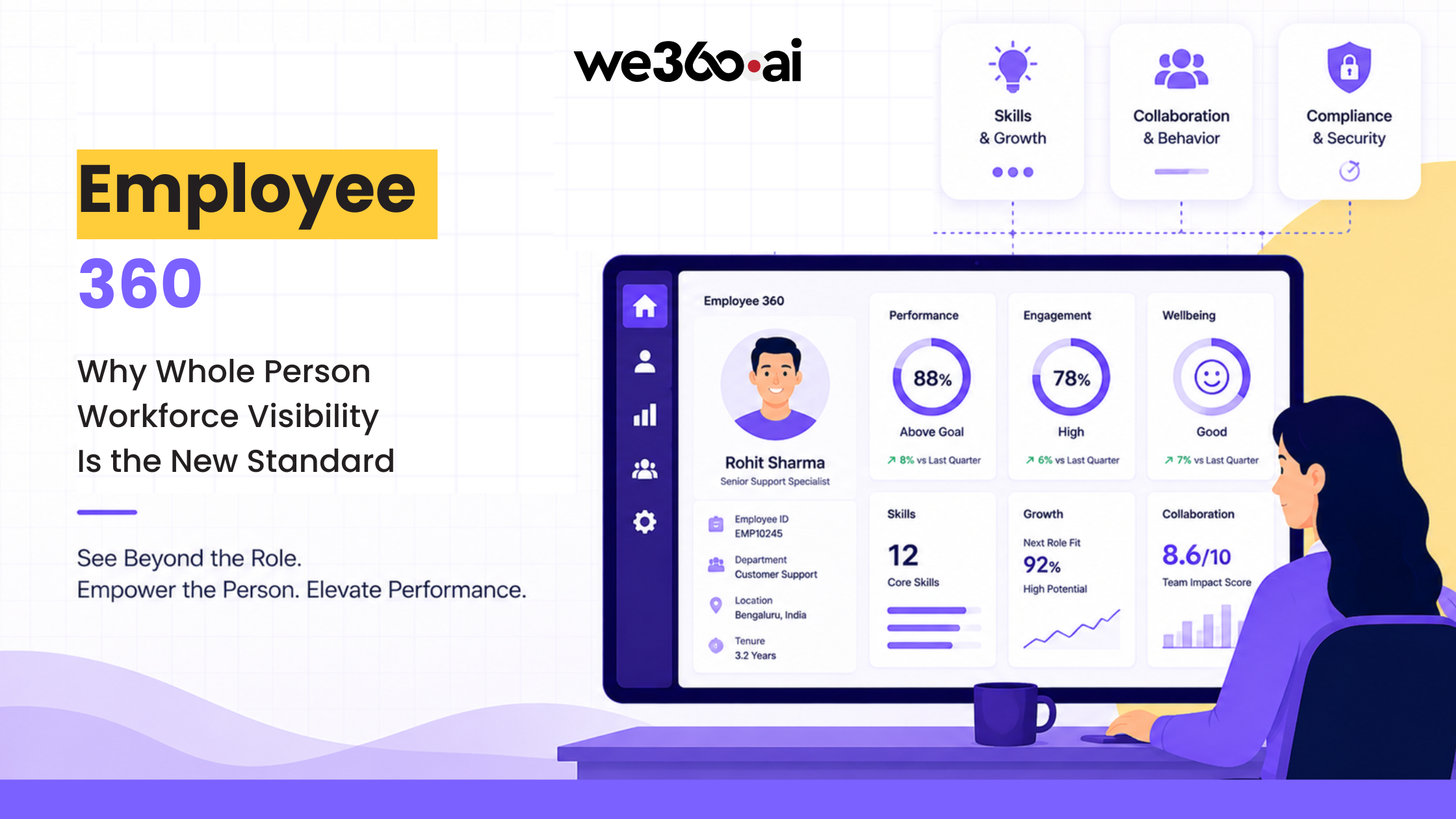
An Employee 360 brings attendance, performance, engagement, learning, and workforce data into one unified view. This 2026 guide explains how Employee 360 works, what data it includes, its benefits for HR teams, and how to implement it effectively while maintaining employee trust and data privacy.

Toxic workplaces rarely become unhealthy overnight. They develop through patterns of poor communication, favoritism, constant blame, unresolved conflict, and fear of speaking up. In this guide, discover the 10 key signs of a toxic workplace, how to spot subtle red flags like gaslighting and workplace cliques, and practical ways to address them.
Employee burnout often shows up in behavior before employees talk about it. Rising overtime, slower responses, more mistakes, reduced participation, and withdrawal can all be early warning signs. This guide covers the key signs of employee burnout, what causes it, and how managers can spot and address burnout before it affects productivity and retention.